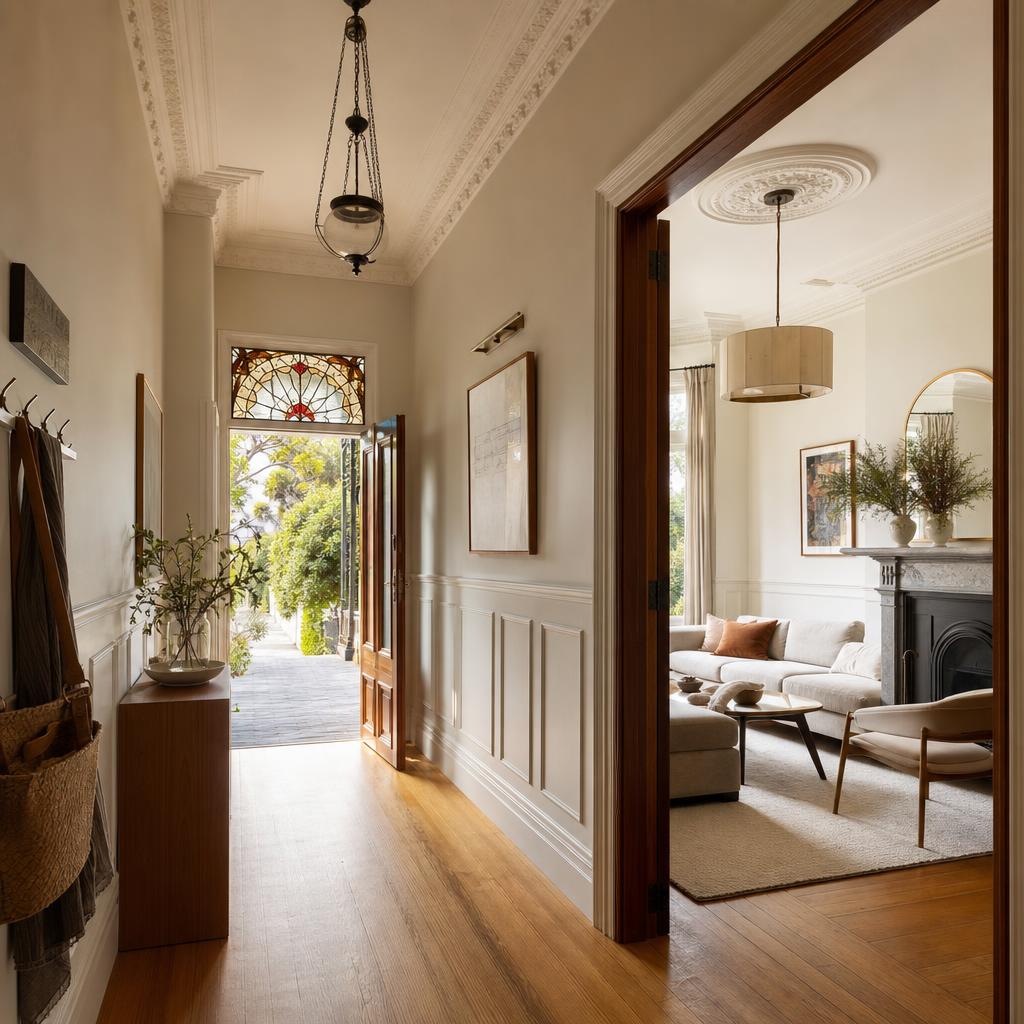
Federation homes are valued for their generous rooms, detailed timberwork, stained glass and strong street presence. Renovation should make the house easier to live in without sanding away the qualities that made it worth keeping. The most successful projects establish what is significant before deciding what is new.
Identify the original hierarchy
Front rooms, hallways and formal entries usually carry the strongest heritage character. Rear additions may allow a more contemporary approach. Understanding that hierarchy helps determine where original skirtings, architraves, doors and decorative details should be restored, and where simpler new work can begin.
Repair before replacing
Original timber doors and mouldings often show wear but remain well made. Localised repairs, careful filling and new hardware can preserve their proportions and material quality. When replacement is necessary, profiles should be matched deliberately rather than approximated with the nearest standard trim.
Let new work be quietly different
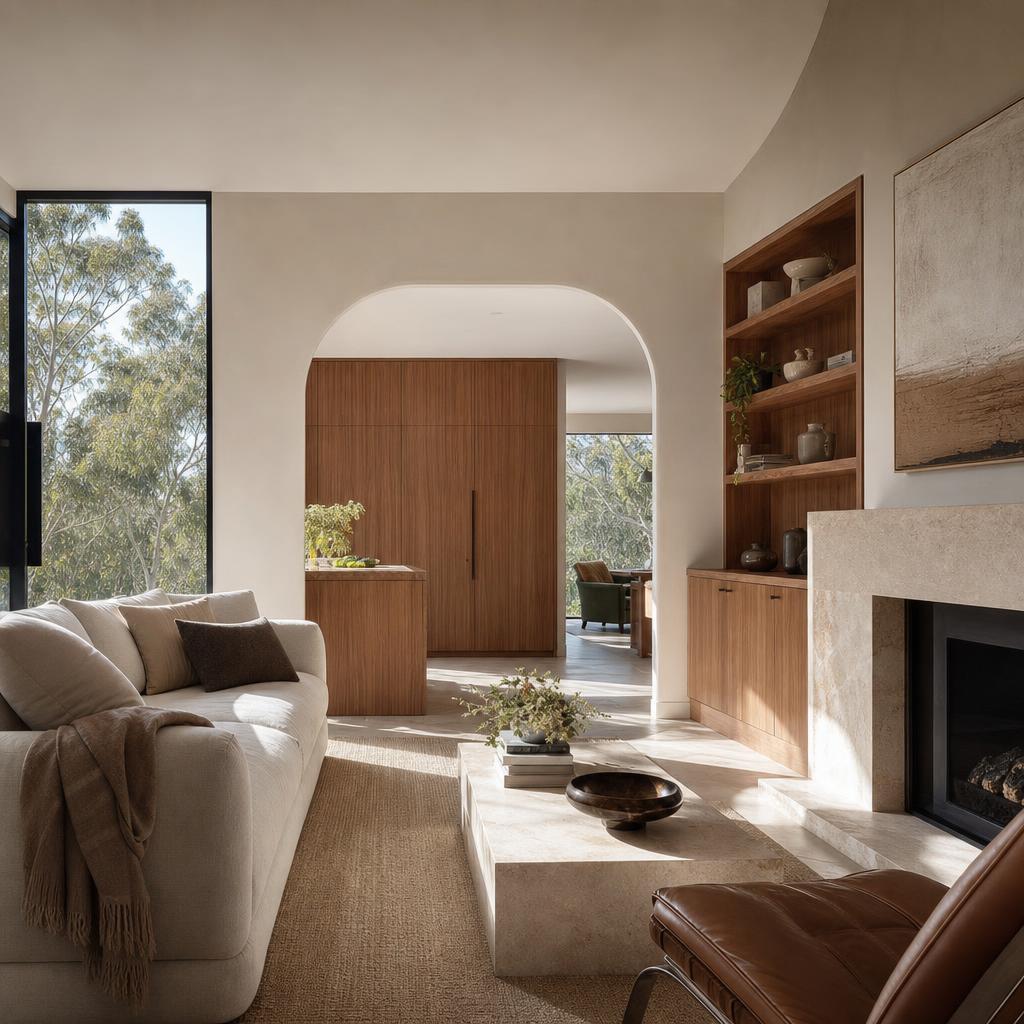
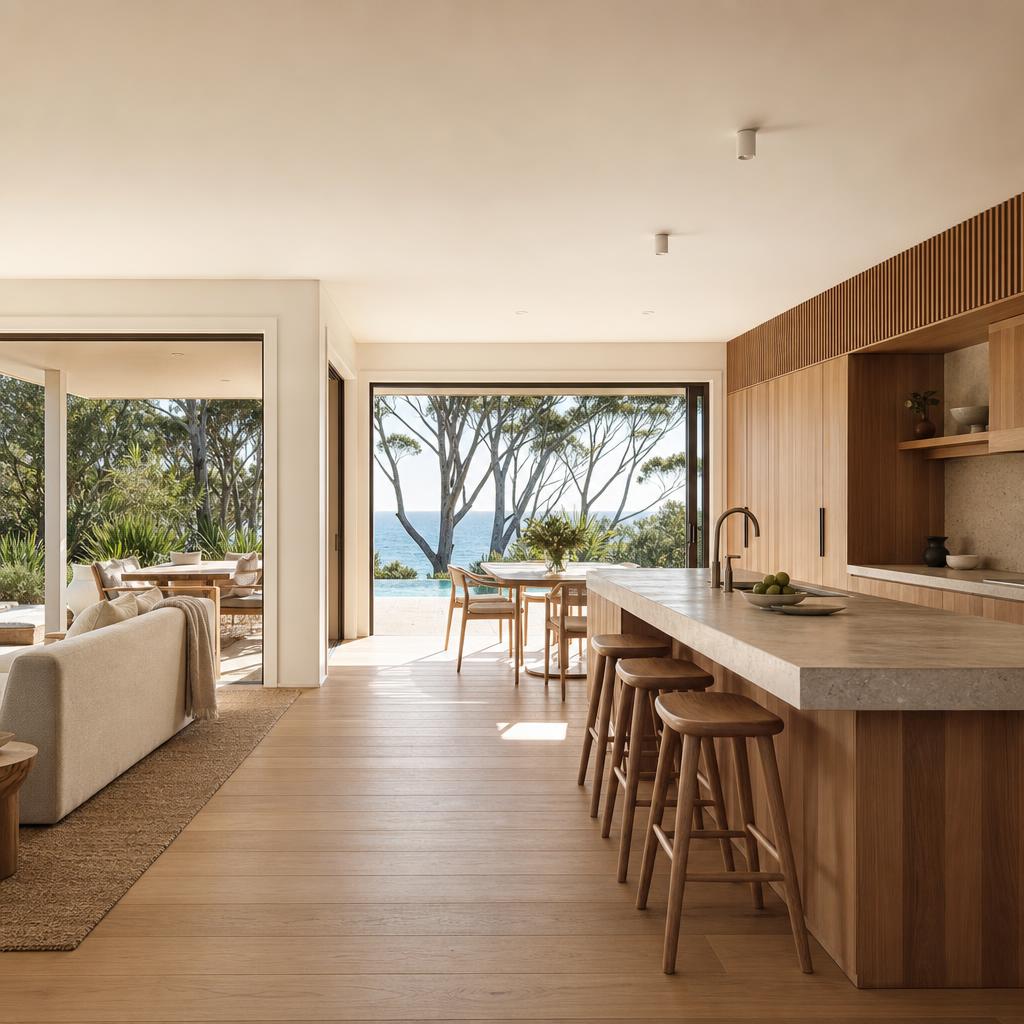
A new addition does not need to imitate every heritage detail. Clean-lined joinery, modern openings and restrained materials can create a respectful contrast. Repeating a datum, timber tone or opening proportion is often enough to connect old and new areas.
- Document existing profiles before demolition begins.
- Reuse sound doors and hardware where practical.
- Align new openings with established heights and sightlines.
- Choose modern services that minimise damage to original fabric.
Use panelling to restore rhythm
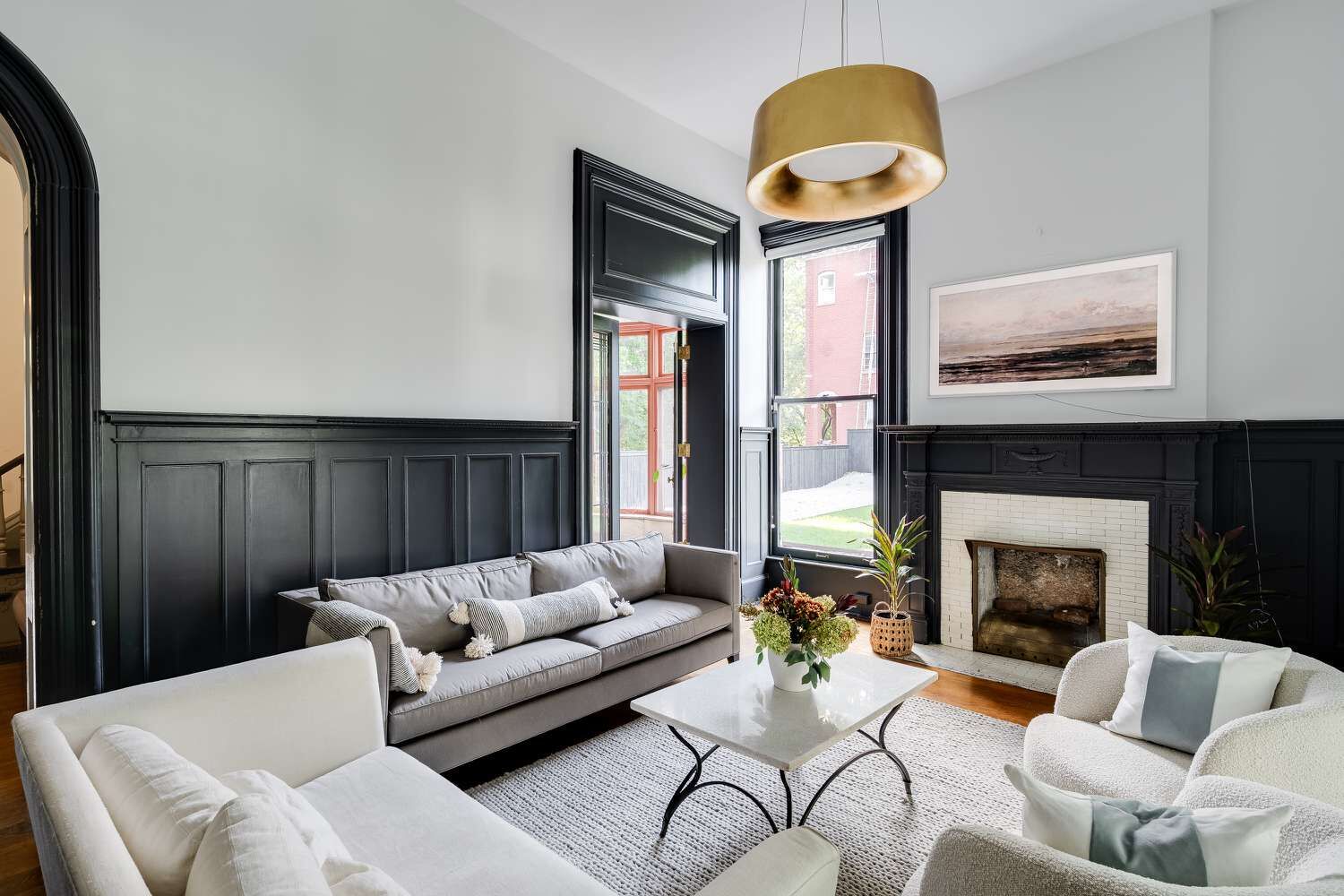
Wainscotting and wall panelling can add depth to long hallways and formal rooms, but the scale needs to suit the home. Panel widths should respond to door openings, wall lengths and furniture positions. Clean geometry and a consistent paint finish keep the result from feeling overly decorative.
Keep the finish consistent
Small inconsistencies become obvious in a detailed house. Matching margins around doors, resolving corners cleanly and keeping repeated lines level creates visual calm. That precision allows restored heritage elements and new work to feel like parts of one considered home.