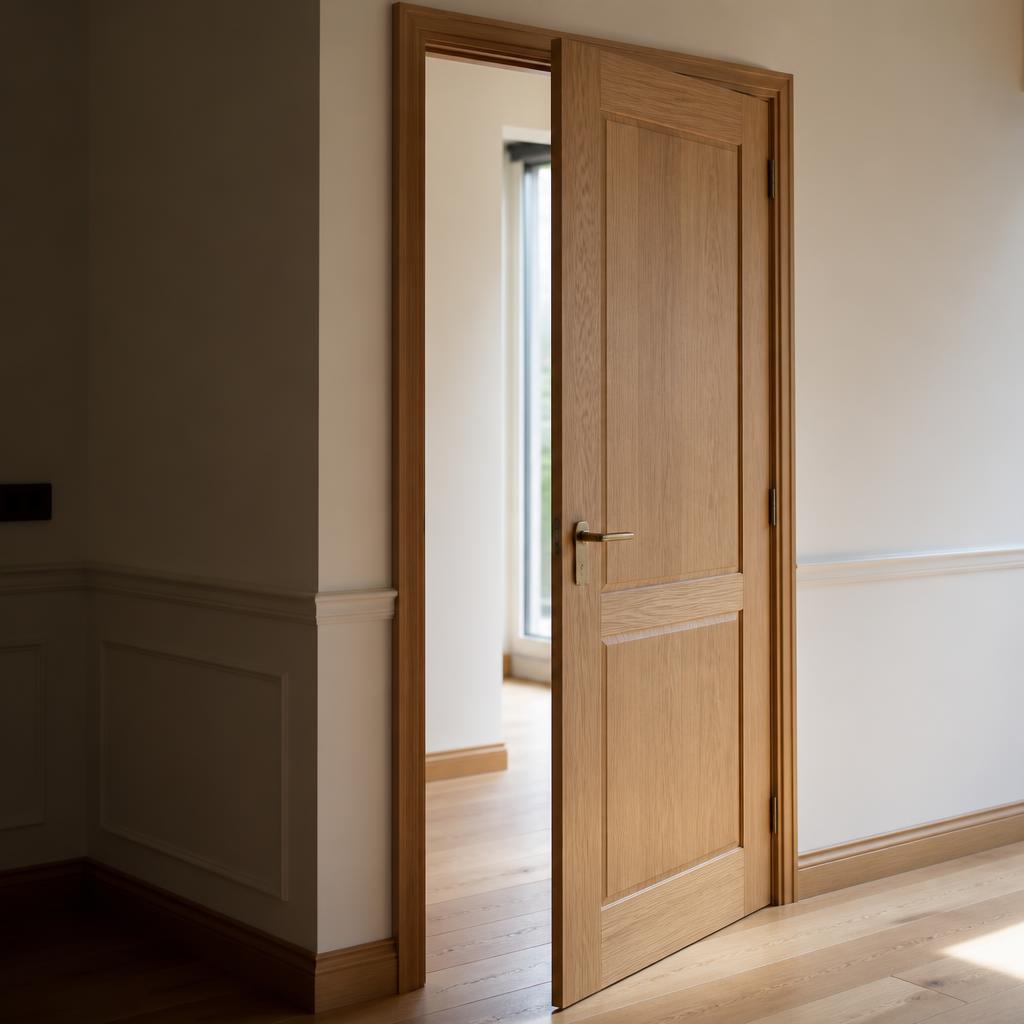
When a door needs a lift, a push or repeated attempts to latch, the lock is an obvious suspect. It is not always the cause. The leaf, hinges, frame and strike work together, and a change anywhere in that system can affect engagement. Replacing the visible handle alone may leave the original problem untouched.
Our door hardware fitting and adjustment service covers the alignment of latches, strikes, hinges and associated fittings. Describe what the door does rather than diagnosing the required part yourself. “It catches only when lifted” gives the installer more useful information than “the lock is broken”.
Observe the pattern without forcing the door
Note whether the issue began suddenly or developed gradually, and whether it followed flooring work, painting or a hardware change. Look at the visible margins around the leaf and record any rubbing or obvious damage. Keep observations non-invasive: do not dismantle a security assembly, enlarge a strike opening or remove material in an attempt to make an uncertain fault disappear.
Look beyond the latch
A leaf that has dropped or a frame that has moved may put the latch out of line with the strike. Hinge wear, fixing condition or interference from the floor can contribute. Repeated rubbing or other signs of movement may require investigation beyond the hardware itself. A qualified assessment should identify the cause before choosing an adjustment or replacement.
Distinguish poor operation from a security concern
If an entry door cannot be secured, treat that as a prompt security issue rather than waiting for a cosmetic renovation. Arrange appropriate professional assistance. Fire-rated, shared-building and other regulated doors need particular care: an apparently minor alteration can affect the assembly’s intended operation. Do not assume a general adjustment is appropriate for every door type.
- Record the door’s location, type and any known special requirements.
- Describe whether the handle moves normally and when the latch fails to engage.
- Photograph the whole doorway and visible hardware without exposing private security information.
- Mention recent building work, changes in floor height or signs of ongoing movement.
Agree what the repair should resolve
Ask whether the proposed work addresses the alignment, damaged hardware or both. Confirm what making good and finish touch-ups are included. A repair should be checked through a normal opening-and-closing cycle without unusual force. If the contractor identifies an unresolved underlying issue, obtain a clear explanation and next step rather than accepting a temporary adjustment as a complete remedy.
Where the door leaf or jamb is itself in poor condition, read assessing existing jambs before replacing internal doors. If the issue prompts a wider hardware update, use our room-by-room passage, privacy and locking schedule to avoid ordering unsuitable replacements.
For a multi-door project, separate isolated faults from recurring symptoms throughout the home. Several doors changing at once may deserve a broader assessment. Clear observations help the right professional investigate efficiently; they should not become a reason for the homeowner to carry out unplanned adjustments to a door that performs a safety or security function.