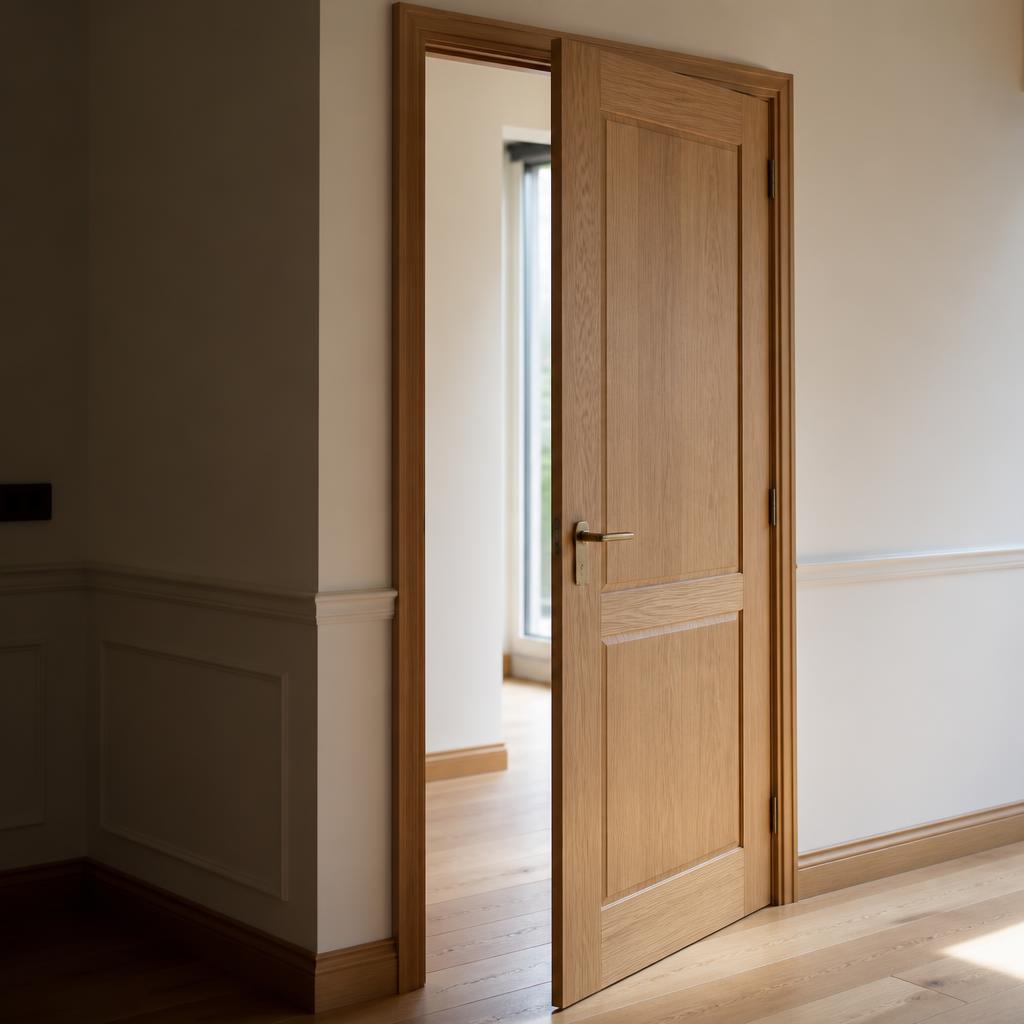
Matching handles can make a home feel coherent, but matching function on every door rarely makes sense. A hallway cupboard, bedroom, bathroom and entry have different needs. A room-by-room hardware schedule separates the appearance of the collection from the way each opening works, making both purchasing and installation more precise.
Visionary Fitouts’ door hardware and lock installation service includes handles, hinges, latches, privacy sets, locks, stops and closers. Begin with use: who passes through the opening, whether privacy is needed and how the door should behave when released. Then confirm the selected hardware suits the actual leaf and frame.
Passage hardware for everyday movement
Passage sets generally provide a handle and latch without a privacy lock. They can suit rooms where people need to move freely, but the exact function varies by product. For cupboards and paired doors, determine which leaves are active and how each should be held closed. Do not order identical sets simply because the visible handles look the same.
Privacy is not the same as security
A privacy set is intended to manage everyday privacy, commonly in a bathroom or bedroom. Ask about the specific product’s operation and appropriate emergency-release arrangement. It should not be assumed to provide the same protection as an entry locking system. Accessibility, occupant needs and any applicable requirements should guide the selection.
Treat entry locking as a complete decision
Lock performance depends on more than the cylinder or handle finish. Door construction, frame condition, strike fixing and the selected system all matter. Where an opening has security, fire, access or egress requirements, obtain the appropriate advice before substituting hardware. A coordinated appearance is not evidence that a product or installation satisfies those requirements.
- Name or number every opening and record its passage, privacy or locking function.
- Confirm door thickness, handing and compatibility with existing preparation.
- List hinges, latches, strikes, stops and closers alongside the visible handle.
- Coordinate finishes with nearby cabinetry, while checking actual supplier samples.
- Record who supplies each component and what installation or adjustment is included.
Check the everyday details
Try the handle where possible. Consider grip, clearance from nearby walls and how a stop prevents damage without obstructing circulation. Heavy doors and closers need suitable hardware and support; selecting them independently can create an awkward combination. If retaining existing fittings, assess condition and compatibility rather than assuming everything behind the new handle can remain.
Hardware decisions should be made alongside the choice between hinged, cavity sliding and pivot doors. If an existing latch is unreliable, read what to assess when a door will not latch before buying a replacement set.
Keep the final schedule with the product details and any care instructions. It becomes a useful reference when another room is renovated or a component needs attention. The goal is not a long specification for its own sake, but a clear record that makes the home consistent to look at and straightforward to use.