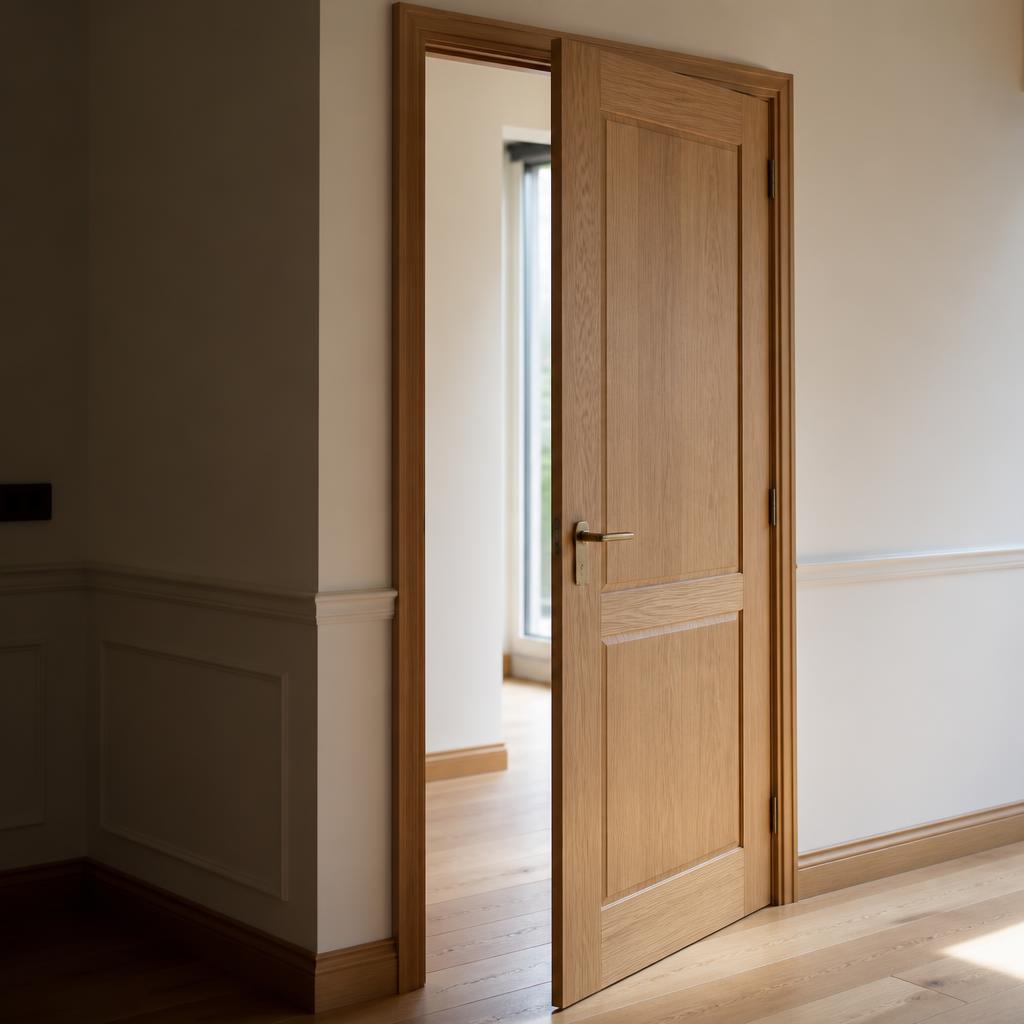
Replacing an internal door leaf can refresh a room without removing every surrounding trim. Whether that is a sensible approach depends on the existing jamb, the chosen door and the reason for replacement. A tired finish is one problem; a distorted opening or poorly supported hinge is another. Start with the condition of the doorway, not a catalogue size.
Visionary Fitouts’ internal door fitting service includes new door sets and fitting to existing openings. An on-site assessment helps distinguish a straightforward leaf replacement from a doorway that needs repair or replacement. It also reveals how new floors, fresh paint and different hardware affect the intended scope.
Assess the jamb before ordering the leaf
Ask the installer to check the opening in more than one place and assess whether its sides and head are consistent. Existing openings are not always square, and nominal door dimensions are not a substitute for site measurement. Look at the condition of the jamb, stops and hinge fixing areas, including damage left by earlier adjustments.
Treat sticking as a symptom
A door that rubs may be affected by hinge wear, movement, moisture or a changed floor level. Removing material from a replacement leaf will not necessarily resolve the underlying cause. If there are signs of continuing movement or moisture, investigate them through the appropriate professional before treating the problem as finishing carpentry alone.
Coordinate clearances and hardware
The new leaf must work with the completed floor, not just the surface present on measurement day. Confirm whether underlay, boards, tiles or a floor transition are still to come. Hardware positions also matter: existing recesses and holes may not suit the new hinges or latch. Discuss the extent of making good and the appearance you expect after painting.
- Identify which leaves, jambs and architraves are to stay and which may change.
- Confirm door dimensions and product limitations with the installer before ordering.
- Agree whether handles, latches, hinges and stops are reused or replaced.
- Include preparation, patching and final painting responsibilities in the written scope.
- Flag any fire-rated, entry or other regulated door assembly for specialist assessment.
Compare the complete outcome, not just the leaf price
Retaining a sound jamb can limit disturbance, but an unsuitable opening can consume time in adjustment and repair. Compare a leaf-only scope with a complete door-set scope, including trims and finishing. Do not assume that the smaller material purchase is always the better overall result, or that every older jamb needs to be discarded.
If you are considering a different operating system, compare hinged, cavity sliding and pivot doors before committing. Where the door closes but the latch does not engage, our guide to diagnosing a door that will not latch separates alignment concerns from hardware selection.
A clear replacement schedule is useful in a multi-room project. Label each opening and note the desired finish, handing, hardware and any known issue. That allows a quote to address the actual mix of conditions in the house instead of assuming that every doorway will require the same amount of work.